
The Generational Blueprint™
Help every generation work better together.
The Generational Blueprint™ is our framework for understanding how generational change is reshaping the modern workplace and how organisations can respond.
Built on Dr Eliza Filby’s work advising global organisations on generational change, leadership and the future of work, The Generational Blueprint™ translates her research into practical workplace learning that teams can apply every day.

“The Generational Blueprint, which used scenarios and discussion to equip our leaders and supervisors to build more effective working relationships with junior colleagues, was engaging and informative – it thoroughly fulfilled our objectives. Our delegates described [it] as ‘interesting, commanding, and authoritative.’”
The Generational Blueprint™ gives organisations a shared language for understanding generational differences and how they show up at work.
Different generations can bring different expectations around communication, feedback, leadership and ways of working. These can show up in everyday challenges such as:
Misalignment around communication, feedback and workplace expectations
Different expectations of managers, leaders and colleagues
Valuable knowledge and experience not transferring effectively between career stages
The Generational Blueprint™ helps organisations turn those differences into stronger ways of working.
How The Generational Blueprint™ Works
The Generational Blueprint™ turns generational insight into practical workplace learning, helping people recognise where different expectations and assumptions show up in their day-to-day work and giving them practical ways to respond.
Through interactive, scenario-led learning, participants:
Explore the research and changing workplace dynamics shaping different generations
Work through realistic scenarios around communication, feedback, management and ways of working
Challenge assumptions and hear different perspectives from colleagues
Apply the learning to situations they encounter in their own teams and workplace
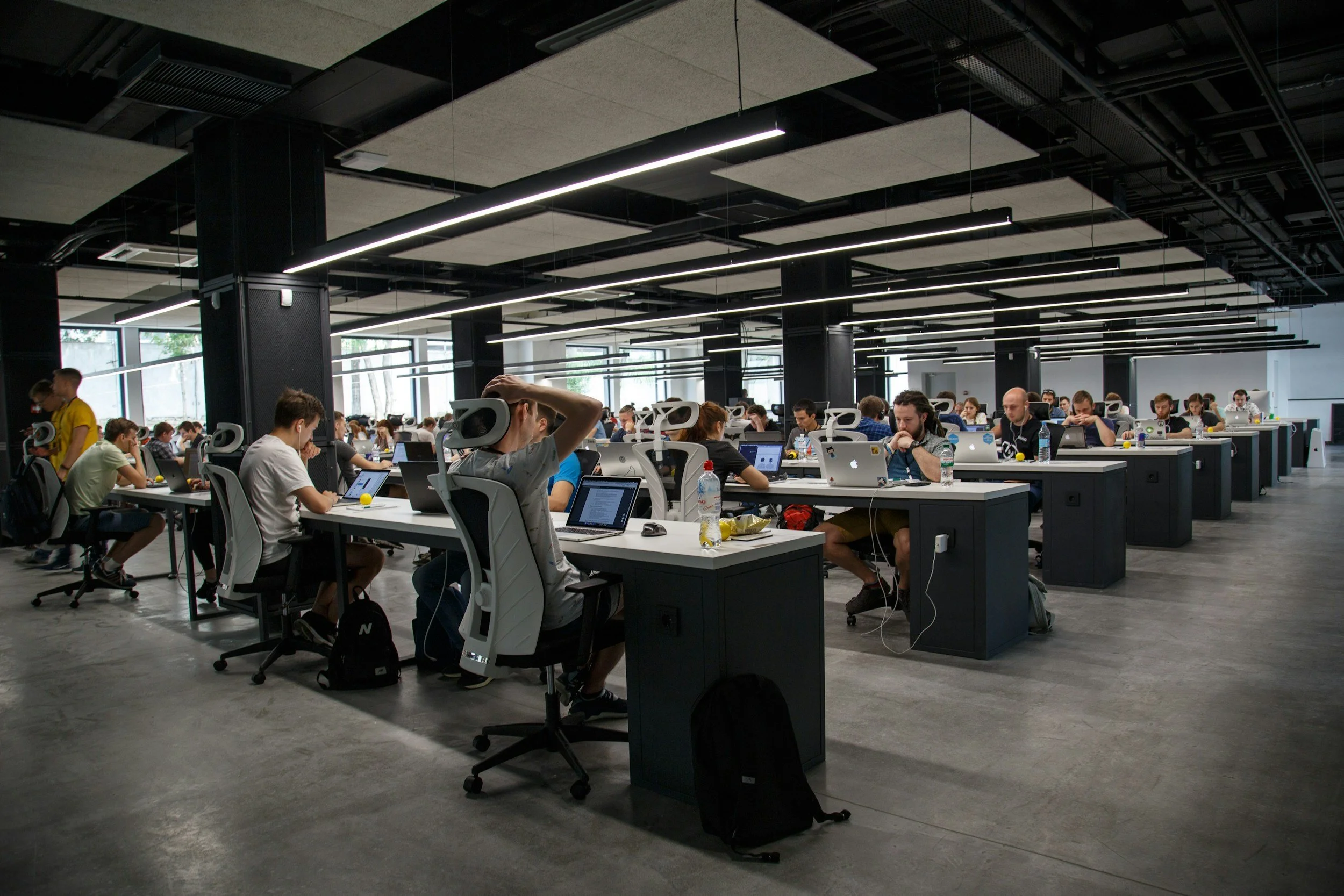
The result is learning that doesn't stop at awareness. People leave with practical ways to communicate, collaborate and work more effectively across generations.
Where could you use The Generational Blueprint™?
The Generational Blueprint™ can support learning and development across your organisation, from onboarding and Early Careers through to management and leadership development.
It can be used within:
Leadership and management programmes
Graduate and apprenticeship programmes
Onboarding and induction
Learning, culture and people development initiatives
Team sessions, away days, town halls and lunch & learns
Use the full programme or bring individual elements into learning you already have in place.
Better conversations. Stronger managers. More effective multigenerational teams.
The Generational Blueprint™ helps organisations turn generational understanding into better ways of working:
Clearer communication and expectations
More confident managers and better feedback
Stronger collaboration across generations
Better knowledge-sharing across career stages
The Results

Proven impact
Following a 90-minute The Generational Blueprint™ workshop for newly appointed partners at a global law firm:
1/3 reduction in belief in generational stereotypes
4 in 5 participants identified specific behaviours they felt equipped to change
40%+ increase in confidence in leading a multigenerational workforce.
Internally-Led Delivery
Internally-Led Delivery
Delivery
Eliza-Led Delivery
For organisations that want to embed The Generational Blueprint™ internally at scale.
A ready-to-deliver programme with the content, tools and guidance your team needs to deliver the learning in-house.
Multigenerational Teams Programme
For multigenerational teams, managers and leaders across your organisation.
Learn more
Early Careers Programme
For graduates, apprentices, trainees and the managers supporting them.
Learn more
For organisations that want the programme delivered across teams and cohorts by a facilitator trained in The Generational Blueprint™ methodology.
For senior leadership alignment and strategic direction, with high-impact workshops and masterclasses led by Dr Eliza Filby.
Case Studies
-
A UK-based global law firm partnered with The Generational Blueprint™ to support its early careers cohort in navigating the realities of a multigenerational workplace.
At the outset, confidence was low. Many participants felt uncertain about how to operate across age groups, with 44% identifying unclear expectations as the primary source of friction. What emerged quickly was that this wasn’t simply a communication issue, but a generational one, with expectations being formed, interpreted and experienced very differently across levels of seniority.
Through scenario-based exercises grounded in real workplace situations, participants explored how generational differences shape communication, feedback and performance - not in theory, but in practice.
By the end of the session, there was a clear shift. Confidence had increased, but more importantly, so had clarity. Participants left with a practical toolkit: how to set expectations early, ask better questions and build more effective relationships with senior colleagues.
The outcome was not just greater understanding, but greater agency - moving from uncertainty to a more deliberate, confident way of working across generations.
-
A UK government organisation used The Generational Blueprint™ to explore how generational dynamics were shaping the experience of new young recruits.
Across multiple cohorts, a consistent picture emerged. New recruits were not simply navigating a new role, but a set of assumptions about age, experience and capability. At the same time, they were encountering differing expectations around communication, progression and workplace culture.
What surfaced was not generational conflict, but misalignment in how work was approached, how contribution was recognised, and how development was understood.
Using The Generational Blueprint™ as a lens, the organisation was able to move beyond individual perceptions and build a more structured understanding of these dynamics. This enabled more targeted interventions around communication, leadership visibility and career pathways.
The result was a more deliberate and coherent approach to engaging new recruits, recognising that in a multigenerational workforce, clarity and consistency matter as much as culture.
-
A US-based global law firm partnered with The Generational Blueprint™ to support newly promoted partners stepping into leadership of multigenerational teams.
At the outset, much of the perceived friction was attributed to juniors’ “work ethic”, particularly around hours, availability and commitment. But as is often the case, these assumptions were masking something more structural: a misalignment in expectations about how work should be done, communicated and measured.
Through the session, partners tested these assumptions against real leadership scenarios around expectation-setting, feedback and performance management - the areas where generational differences tend to surface most acutely.
The shift was both immediate and measurable. Endorsement of generational stereotypes fell by one third, while confidence in leading across generations increased by over 40%. Crucially, 80% of participants identified specific behaviours they needed to change.
What emerged was not a softer approach to leadership, but a more consistent and deliberate one, better suited to the realities of a multigenerational workforce.
Ready to make multigenerational working work better?
Bring The Generational Blueprint™ into your organisation.
Talk to the All Relative team about your teams, your learning priorities and how the programme could work for you and your organisation’s objectives.
Contact Alex, Client Relationships Lead, to learn more or book a call.